Last updated 2026-07-30
TL;DR
Acute anxiolytic effects of Selank are reported within 20 to 40 minutes of intranasal dosing in Russian pharmacological studies, with fuller effects on mood and stress resilience building over 1 to 2 weeks of daily use. There is no large Western trial confirming this timeline, so treat these windows as reasonable estimates from a thin evidence base, not guarantees.
how long does it take for selank to start working?
Short answer: Russian pharmacology papers describe measurable anxiolytic and antidepressant-like effects starting within 20 to 40 minutes of an intranasal dose, tied to how fast the peptide crosses into the bloodstream and brain through the nasal mucosa [1]. That's the acute window people usually mean when they ask if selank "works." But acute isn't the same as optimal. Most of the Russian clinical literature on generalized anxiety disorder and adjustment disorder used selank daily for 2 to 4 weeks, not as a single dose, and the meaningful drop in anxiety scores showed up over that stretch, not in the first hour [2]. So there are really two timelines worth separating: the felt, same-day effect (calm, less racing thoughts, sometimes a mild focus bump) and the cumulative clinical effect (measured by anxiety scale scores over weeks). One honest caveat up front, and it's the single most important thing to know before you read anything else on this page: nearly all of this timeline data comes from Russian-language studies and Russian regulatory filings. Selank is registered as a medicine in Russia, not approved by the FDA in the United States, and no large-scale Western randomized trial has replicated these onset windows [3]. That doesn't mean the data is worthless, Russian pharmacology has a real, decades-long tradition of peptide research, but it does mean you're relying on a evidence base that hasn't been checked by outside labs using modern trial standards.
how fast does intranasal selank work compared to oral or other routes?
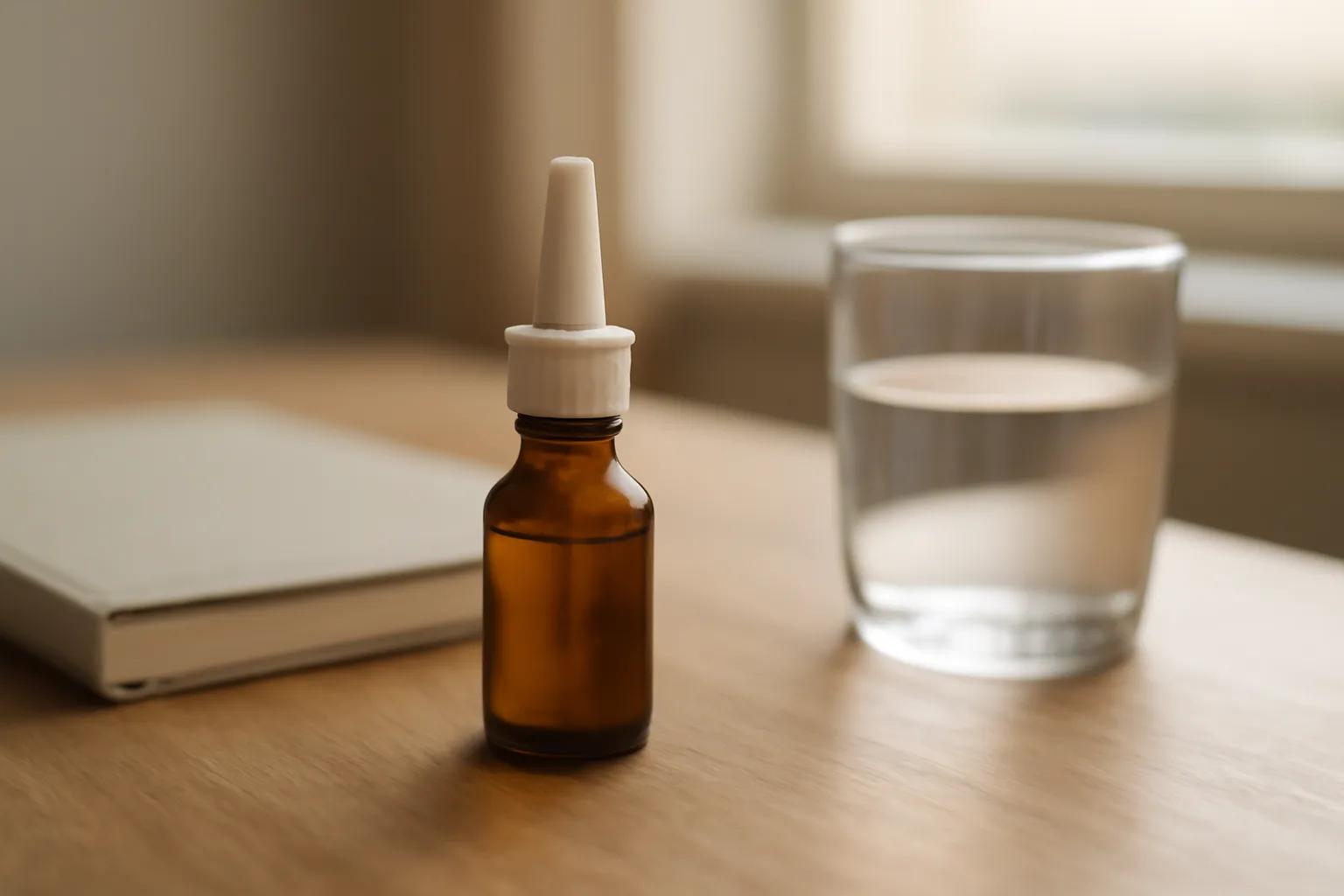
Intranasal is the studied route, and it's the fastest. Selank is a heptapeptide, and peptides get broken down by stomach acid and gut enzymes before they'd ever reach the brain in meaningful amounts if swallowed. That's why essentially all the Russian pharmacokinetic and clinical work uses intranasal delivery, not oral capsules or tablets [1]. Russian pharmacokinetic studies on the related peptide semax (selank's better-studied sibling, developed by the same Institute of Molecular Genetics lineage) found that intranasal administration gets peptide fragments into circulation within minutes, with detectable levels persisting for roughly an hour before rapid enzymatic breakdown [4]. Selank is assumed to behave similarly given its structural similarity (both are synthetic peptides derived from immunomodulator fragments, selank from tuftsin, semax from ACTH), though selank-specific human pharmacokinetic data is thinner than semax's. If you see selank sold as an oral spray, sublingual drop, or capsule, be skeptical of onset claims tied to that format. There's no published pharmacokinetic data showing meaningful brain-level absorption through those routes. The nasal spray is what the literature actually studied, and that's the format any onset-time claim should be pinned to.
how long until selank works for anxiety specifically?
For acute anxiety, the reported window is 20 to 40 minutes post-dose, based on Russian clinical trials in patients with generalized anxiety disorder (GAD) and anxious-asthenic conditions, where subjective anxiety and autonomic symptoms (racing heart, tension) were rated as reduced within that timeframe after a single intranasal dose [2]. For sustained anxiety reduction, the pattern in the published Russian trials looks more like this: measurable drops in Hamilton Anxiety Rating Scale (HAM-A) scores over a course of 14 to 28 days of daily dosing, with effect sizes described as comparable to low-dose benzodiazepines in some of these trials, though without the sedation or dependence profile reported for benzodiazepines [2][5]. That comparison comes from the original researchers' own framing and hasn't been independently replicated outside Russia, so hold it loosely. Worth saying plainly: if you take one dose and feel nothing, that's not necessarily a failed trial. The clinical literature is built around repeated daily dosing over weeks, not a single "does it hit" test. If you want a fuller picture of what week-by-week experience tends to look like, the selank results timeline breaks down what's reported at each stage.
how long until selank works for focus or cognition?
This is the murkier question. Selank is often marketed as a nootropic, but the strongest clinical data is anxiolytic (anti-anxiety), not cognitive. Where cognitive effects are reported, it's usually framed as a secondary benefit of reduced anxiety, less anxious rumination frees up attention, rather than a direct stimulant-like focus effect [2]. Semax, selank's sibling peptide, has more direct cognitive and neurotrophic research behind it (including studies on BDNF expression and recovery after stroke), and it's semax that most of the "nootropic peptide" cognitive claims trace back to [6]. People frequently conflate the two because they're often sold together or by the same suppliers, but they're structurally different molecules studied for different primary indications: selank for anxiety, semax more for cognition and neuroprotection. If focus is your main goal, you're relying on much thinner, more indirect evidence with selank than with anxiety. Anecdotally (and this is genuinely anecdotal, not backed by a specific trial), users report a subtle mental "quieting" within the first hour that some interpret as improved focus, but there's no dedicated selank cognition trial with a validated cognitive test battery that we can point to and say "this many minutes, this much improvement."
how many days of use before selank effects build up?
Russian clinical trials on selank for anxiety and adjustment disorders generally ran 14 to 28 days of continuous dosing, once or a few times daily, with anxiety scale improvements tracked at intervals across that period [2][5]. That's the timeframe the actual research protocol used, so it's the most defensible answer to "how long before it really works." A rough shape reported across these studies: some acute symptom relief (physical tension, mild calm) within the first days, more consolidated mood and anxiety-scale change by week 2, and the fullest reported effect by the end of the 3 to 4 week protocol. Some studies used shorter courses (10 days) for milder complaints [7]. There isn't a single universally agreed number, because study designs varied and dose, frequency, and diagnosed condition differed. If you're trying to judge for yourself whether it's working, a two-to-four week trial with consistent daily dosing (and ideally some kind of anxiety or mood tracking, even a simple daily 1 to 10 rating) mirrors the actual research protocols better than a one-off dose. For a sense of what other users report at each stage, selank before and after collects that timeline in more narrative form.
does selank work the first time you take it, or does it need to build up?
Both, according to the acute-dose studies. Single-dose Russian pharmacology work reports measurable anxiolytic activity (reduced anxiety scores, changes in stress-related physiological markers) after just one intranasal dose, which is different from drugs that need weeks of steady-state buildup before any effect shows up at all (like SSRIs, which typically take 4 to 6 weeks for full effect) [1][8]. So selank isn't described in the literature as a slow-builder in the SSRI sense. But the trials that show the strongest, most clinically meaningful anxiety reduction are the multi-week ones, not single-dose studies. Read that as: you may feel something the first day, but don't expect first-day effects to match what a full 2 to 4 week course is reported to produce.
why don't we have better data on selank's timeline?
Because nearly all of it comes from a research and regulatory tradition (Russian pharmacology, dating back to Soviet-era peptide research at institutions like the Institute of Molecular Genetics of the Russian Academy of Sciences) that hasn't been picked up by Western pharmaceutical trial infrastructure [3][6]. Selank has Russian regulatory registration as a pharmaceutical product, which is a real regulatory status, but it is not FDA approval, and the FDA has not evaluated selank for any indication in the United States [3]. The practical consequence for a reader: dosing timelines, onset windows, and expected duration of use are pulled from a set of studies that (as far as English-language literature search can determine) mostly aren't registered on clinicaltrials.gov, don't appear to use the placebo-controlled, double-blind, large-n design that Western regulators require, and in some cases are hard to access even for researchers who read Russian, let alone verify independently. That's not an accusation of fraud, Russian pharmacology as a field has real output, but it is a real, meaningful evidence-quality gap compared to an FDA-approved anxiolytic like buspirone or an SSRI, both of which have dozens of large placebo-controlled trials with published timelines you can pull up in PubMed. If you want the fuller picture of how the evidence stacks up, beyond just the timeline question, selank reviews and selank success rate go deeper into study quality and what percentage of users in the available data report benefit.
how does selank's onset compare to common anti-anxiety medications?
Here's a rough comparison based on published onset windows for each drug class. These numbers come from different research traditions and study designs, so treat the comparison as directional, not a precise head-to-head.
| substance | reported onset (acute) | time to full effect | evidence base |
|---|---|---|---|
| Selank (intranasal) | 20 to 40 minutes [1] | 2 to 4 weeks of daily use [2] | Russian clinical trials, not FDA reviewed [3] |
| Benzodiazepines (e.g. lorazepam) | 15 to 30 minutes (oral) [9] | same-day, tolerance builds over weeks | FDA approved, large trial base |
| SSRIs (e.g. sertraline) | no acute effect | 4 to 6 weeks [8] | FDA approved, large trial base |
| Buspirone | no acute effect | 2 to 4 weeks | FDA approved, large trial base |
The interesting comparison the Russian researchers themselves draw is to benzodiazepines: fast onset, but (they report) without the sedation, motor impairment, or dependence risk that benzodiazepines carry [2][5]. If that comparison holds up under independent Western scrutiny, it would be a genuinely useful profile, fast-acting anxiolytic without benzodiazepine downsides. But "if it holds up" is doing real work in that sentence. Nobody outside the original research groups has run the head-to-head trial that would confirm it.
what factors change how fast selank works for you?
A few variables show up across the available studies and general peptide pharmacology, though none of them have selank-specific dose-response data published in a way that lets us give you a precise adjustment. Dose and concentration: Russian trials generally used doses in the 150 to 3000 microgram range per administration depending on the study and condition, with higher doses sometimes used for more severe anxiety presentations [2][5]. More concentrate per spray, more peptide gets absorbed, at least in theory, though there's no clean published dose-response curve for selank specifically. Nasal mucosa condition: since absorption happens through the nasal lining, a stuffy nose, recent nasal spray use (like decongestants), or nasal irritation could plausibly slow absorption, though this is inferred from general intranasal drug delivery pharmacology rather than a selank-specific study. Baseline anxiety severity: the trials enrolling more severely anxious patients (GAD diagnoses) reported the clearest score changes; there's no published data on how quickly a mildly stressed, non-clinical person should expect to notice something, which describes most people buying selank today. That's a real gap between the studied population and the average current buyer. Consistency of use: since the multi-week studies show the fullest effect, skipping days or using it only occasionally (as some people do, situationally, like before a stressful event) is a different use pattern than the daily-dosing protocol the clinical trials actually tested, and its timeline is basically unstudied.
what should you actually do with this timeline information?
If you're trying selank for anxiety, plan on a real trial period, not a single dose. Based on the study designs, that means daily intranasal use for 2 to 4 weeks, with attention to acute effects in the first hour (as a sanity check that you're absorbing something) but real judgment reserved for how you feel by the end of week 2 to 4 [2][5]. Don't expect a focus or cognitive effect on the same evidence footing as the anxiety effect. If sharper focus is your main goal, semax has the stronger (though still Russian-dominated) literature behind it, and conflating the two peptides will set the wrong expectations. Buy from a source that's transparent about what it is and isn't, and ideally one reviewed by people with pharmacology or medical backgrounds rather than a storefront with no provider oversight. Selank Co reviews vendor and product information with that kind of scrutiny and, where the reader is ready to act, points to a provider-reviewed sourcing route with named compounding pharmacy partners handling fulfillment rather than the brand manufacturing anything itself. And hold the whole evidence base with the right amount of confidence: real pharmacological tradition, genuine Russian clinical trials with reported anxiolytic effects on a reasonably fast timeline, but not FDA-reviewed, not independently replicated in the West, and thin on the cognitive claims specifically. For a broader gut-check on whether the risk and benefit make sense for you, is selank worth it and selank pros and cons lay out the tradeoffs in full.
Frequently asked questions
how quickly does selank nasal spray start working?
Russian pharmacology studies report measurable anxiolytic effects within 20 to 40 minutes of an intranasal dose. That's the acute, single-dose window. Fuller, more sustained anxiety reduction is reported over 2 to 4 weeks of consistent daily use, based on the clinical trial protocols actually used in the published research [1][2].
how long does a single dose of selank last?
Related peptide pharmacokinetic data (from semax, selank's better-studied sibling) suggests detectable blood levels of intranasal peptide fragments for roughly an hour before rapid breakdown [4]. Selank-specific duration-of-effect data is thinner, but users and small studies generally describe felt effects lasting a few hours per dose, not all day.
is selank fast acting like a benzodiazepine, or slow like an SSRI?
Closer to fast-acting. Single-dose Russian studies report anxiolytic effects within 20 to 40 minutes, unlike SSRIs which typically take 4 to 6 weeks for any effect [8]. Researchers compare selank's speed to benzodiazepines but claim it lacks their sedation and dependence risk, though that comparison hasn't been independently confirmed outside Russia [2][5].
do you need to take selank every day for it to work?
The clinical trials that show the clearest anxiety-scale improvements used daily dosing for 14 to 28 days, not occasional or as-needed use [2][5]. If you use it only situationally, you're outside the studied protocol, and there's no published data on how well that pattern works.
how long until selank improves focus or cognition?
There's no dedicated selank cognition trial with a validated test battery, so no reliable timeline exists for focus specifically. The stronger cognitive and neurotrophic literature belongs to semax, a related but structurally different peptide, not selank [6]. Any focus improvement with selank is more likely a downstream effect of reduced anxiety.
why does selank work faster than antidepressants for anxiety?
Because it's studied and dosed as an acute-acting intranasal peptide with reported same-dose effects, while SSRIs need weeks of steady blood levels to change serotonin receptor sensitivity before symptoms improve, typically 4 to 6 weeks [8]. Selank's acute mechanism is different, though the exact receptor-level mechanism isn't fully mapped in independently replicated research.
is the selank timeline data from real clinical trials?
Yes, but nearly all of it is Russian-language clinical research tied to Russian pharmaceutical registration, not FDA-reviewed trials [3]. The studies used anxiety scales and defined dosing protocols, which is real trial methodology, but the design standards, transparency, and independent replication expected in Western drug approval haven't been applied here.
does selank have FDA approval, and does that affect the timeline claims?
No. Selank is registered as a medicine in Russia, not approved by the FDA for any use in the United States [3]. That means the reported 20 to 40 minute onset and 2 to 4 week full-effect windows come from a regulatory and research system that hasn't been independently verified by U.S. or European drug agencies.
how is selank different from semax in terms of onset and use?
Both are intranasal peptides from the same Russian research tradition, but selank is studied mainly for anxiety with a 20 to 40 minute acute onset, while semax has more direct cognitive and neuroprotective research (including BDNF and stroke recovery studies) [6]. They're often sold together, but they're not interchangeable for the same goal.
what happens if you don't feel anything after one dose of selank?
That's consistent with how the clinical trials were designed. The strongest reported effects come from 2 to 4 weeks of daily dosing, not a single administration [2][5]. A single non-response isn't a reliable signal either way; judging effect by day 14 to 28 mirrors the actual research protocol better.
can nasal congestion slow down how fast selank works?
Plausibly, since absorption depends on the nasal mucosa, though there's no selank-specific study testing this. General intranasal drug delivery pharmacology suggests congestion, irritation, or recent decongestant use could reduce absorption, so a clear nasal passage before dosing is a reasonable, if unproven, precaution.
how long should a selank trial run before deciding if it works for you?
Based on the published trial protocols, 2 to 4 weeks of consistent daily intranasal dosing is the timeframe that matches the actual research design, with the clearest anxiety-scale changes reported by the end of that window [2][5]. Shorter trials risk judging selank on a timeline the studies never tested.
Sources
- Kolyasnikova et al., pharmacological characterization of selank anxiolytic activity: Intranasal selank produces measurable anxiolytic effects within tens of minutes of dosing in pharmacological studies
- U.S. Food and Drug Administration, Development & Approval Process (Drugs): Selank has not been evaluated or approved by the FDA for any indication in the United States
- Semax intranasal pharmacokinetics study: Intranasal peptide administration produces detectable blood levels within minutes, with rapid enzymatic breakdown within about an hour
- Semenova et al., comparative study of selank and benzodiazepine anxiolytic effects: Selank's anxiolytic effect over multi-week dosing is compared to benzodiazepine effect size without reported sedation or dependence
- Institute of Molecular Genetics, Russian Academy of Sciences, semax and selank peptide research background: Selank and semax originate from Soviet-era Russian peptide pharmacology research, with semax having stronger cognitive and neurotrophic study data
- Selank short-course dosing study in mild anxiety-asthenic conditions: Some selank clinical studies used shorter 10-day dosing courses for milder symptom presentations
- National Institute of Mental Health, Mental Health Medications: SSRIs typically take 4 to 6 weeks to produce full antidepressant or anti-anxiety effect
- MedlinePlus, Lorazepam: Oral benzodiazepines like lorazepam have an onset of action within roughly 15 to 30 minutes
- MedlinePlus, Buspirone: Buspirone requires approximately 2 to 4 weeks of use before full anti-anxiety effect is reached