Last updated 2026-07-26
TL;DR
Selank and semax are both Russian-developed peptides originally studied and dosed by injection, though most current users take them intranasally. The injectable clinical data comes almost entirely from Russian-language trials that haven't been replicated in the West. Neither drug has FDA approval, and intranasal spray is the far more common (and more practical) route today.
what are selank and semax, and why are they discussed together
Selank and semax are two separate peptides developed in Russia, often mentioned together because they share a research lineage, a country of origin, and a reputation as "nootropic peptides" outside mainstream Western pharmacology. They are not the same molecule and don't do the same thing, even though a lot of forum posts and supplement sites treat them as interchangeable. Selank is a synthetic heptapeptide (Thr-Lys-Pro-Arg-Pro-Gly-Pro) developed by the Institute of Molecular Genetics of the Russian Academy of Sciences, based on the natural immunomodulatory peptide tuftsin. It's studied mainly as an anxiolytic, meaning a drug aimed at reducing anxiety, with some claimed cognitive and immune-modulating effects [1]. Semax is a synthetic heptapeptide derived from a fragment of adrenocorticotropic hormone (ACTH 4-10). It's studied mainly as a nootropic and neuroprotective agent, with the most clinical use in Russia around ischemic stroke and cognitive impairment recovery [2]. Semax carries a Russian Ministry of Health registration for these indications; that is not the same thing as FDA approval, and neither peptide has FDA approval for any use in the United States. If you're trying to figure out which one fits your actual goal, the semax vs selank comparison and its mirror, selank vs semax, both break down the differences in mechanism and typical use case in more detail than this article needs to.
were selank and semax originally injectable drugs
Yes. Both peptides were developed and studied in Russia primarily as injectable and intranasal pharmaceuticals, not as the vial-and-dropper research chemicals sold online today. Semax has a longer clinical history as an injectable, having been studied since the 1980s for stroke recovery, with intramuscular and intravenous administration appearing in older Russian clinical literature alongside the nasal drop formulation that became the standard commercial product (sold in Russia as Semax 1% nasal drops) [2]. Selank's clinical trials, run mostly through Russian institutes in the 2000s and 2010s, generally used intranasal dosing rather than injection, since peptides of this size (both are heptapeptides under 1000 Da) absorb reasonably well through nasal mucosa and the intranasal route sidesteps rapid degradation by peptidases in the gut and bloodstream [1]. The short version: injection is historically real for both, especially semax, but it was never the primary consumer-facing route. Intranasal spray became the default because it's simpler to dose, doesn't require sterile technique, and matches what was tested in most of the outpatient trials.
is a selank or semax injection actually more effective than the nasal spray
Nobody has published a head-to-head bioavailability comparison of injectable versus intranasal selank or semax in humans, so "more effective" isn't a claim anyone can back with data. What we do have is indirect: injection bypasses first-pass metabolism and nasal mucosa absorption variability entirely, which in theory means more consistent systemic exposure per microgram dosed. In practice, this theoretical edge doesn't translate into meaningfully better real-world outcomes for most people, for a simple reason: the intranasal studies of selank already show measurable anxiolytic effects at practical doses (roughly 1500 to 3000 mcg/day split into two or three doses in the trials that used those ranges) [1]. If the nasal route already gets a peptide into circulation well enough to produce the effects reported in Russian trials, the injection route adds sterility risk and inconvenience without a clearly proven benefit on top. The one place injection theoretically matters more is for someone metabolizing the drug unusually fast, or for research contexts trying to control dosing precisely. For a person deciding how to actually use these peptides, that's a narrow edge case, not a reason to default to needles.
how were injections dosed in the russian trials
Older Russian semax literature on intramuscular and intravenous dosing for stroke and cognitive indications generally used doses in the range of several hundred micrograms to a few milligrams per administration, given once or twice daily during acute treatment phases, though exact protocols vary by study and indication and are not standardized in any single reference document accessible in English translation [2]. Selank's injectable dosing history is thinner in the literature. Most of the controlled studies that get cited for its anxiolytic effect, including work published in Neuroscience and Behavioral Physiology and related Russian-affiliated journals, used intranasal administration, not injection [1]. That means if you're looking for a validated injectable selank protocol with a clear mcg-per-kg dose, published human toxicity ceiling, and defined injection frequency, it largely doesn't exist in the peer-reviewed record available in English. This is the single most important thing to understand before considering an injectable route for either peptide: the dosing data that does exist is not standardized, mostly untranslated in full, and was generated for a clinical population under medical supervision in Russia, not for self-administration.
how is a selank or semax injection actually prepared and given
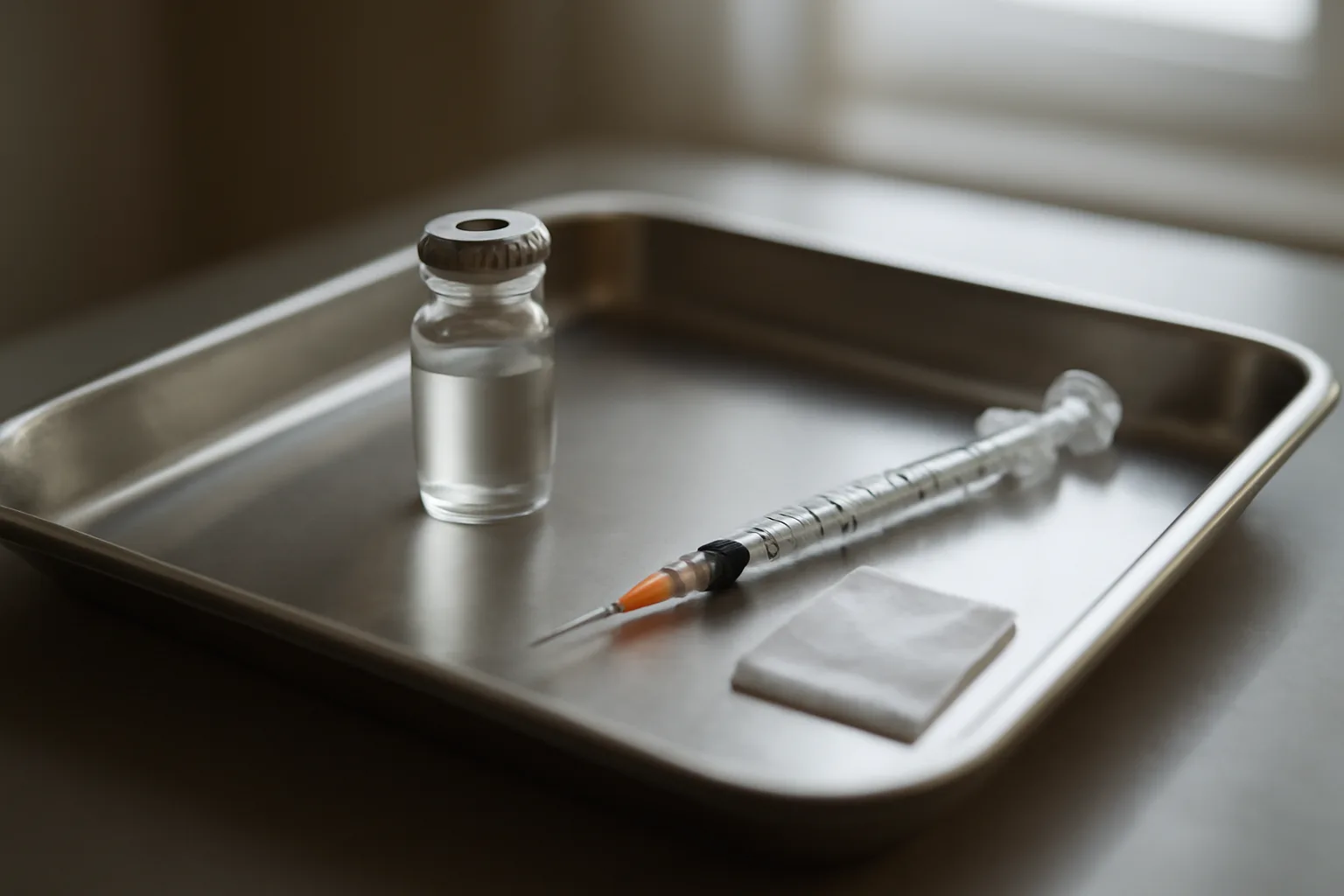
In research contexts, both peptides are typically supplied as lyophilized (freeze-dried) powder in a sealed vial, reconstituted with bacteriostatic water, and drawn into an insulin syringe for subcutaneous injection. This is standard peptide-handling technique, the same general process used for many research peptides, not something unique to selank or semax. The practical steps look like this: sanitize the vial top and the injection site with alcohol, draw bacteriostatic water into the syringe, inject it into the powder vial slowly along the glass wall (not directly onto the powder, which can damage peptide structure), swirl gently rather than shake, and let it fully dissolve before drawing a dose. A few things matter more than people expect. Reconstituted peptide is fragile: it needs refrigeration, generally lasts a couple of weeks refrigerated once mixed (compared to the sealed lyophilized vial, which is stable far longer, particularly frozen), and should never be frozen after reconstitution since freeze-thaw cycles degrade peptide structure. None of this guidance comes from an FDA-reviewed labeling document, because these products don't have one; it's standard peptide-handling practice carried over from the broader research peptide space. If you'd rather skip needles entirely, intranasal is simpler to prepare and dose consistently at home; see how to make selank nasal spray for the practical version of that process.
what are the real risks specific to the injection route
Injection adds a category of risk that nasal spray simply doesn't carry: injection site infection, abscess formation, and the consequences of injecting something that isn't sterile or isn't what the label says it is. Because neither selank nor semax is FDA-approved, no U.S. manufacturer is legally producing them for injection under pharmaceutical-grade sterility and purity standards enforced by FDA inspection. Products sold as "research chemicals" are explicitly not for human use under FDA rules, and quality control varies enormously between suppliers. A 2022 analysis published in JAMA Internal Medicine by Chinchiolo and colleagues, examining marketed peptide products including thymosin beta-4 and BPC-157 sold online, found undisclosed ingredients and labeling problems across sampled vendors, a pattern that has been broadly consistent across independent testing of the gray-market peptide supply chain [3]. Beyond contamination risk, there's the injection technique risk itself: improper reconstitution, non-sterile technique, reused needles, or injecting subcutaneous product intramuscularly by mistake can all cause local reactions ranging from mild redness to abscess requiring drainage. None of this is unique to selank or semax specifically, it's true of any self-injected peptide from an unregulated source, but it's a real and often underweighted cost of choosing injection over intranasal administration. For the fuller rundown of adverse effects reported in the clinical literature for selank specifically (mostly mild and reported at low rates in the Russian trials, things like transient drowsiness or mild dizziness), see selank side effects.
how strong is the russian clinical evidence, honestly
This is the part every serious reader needs answered plainly: the human clinical evidence for both selank and semax is almost entirely Russian, mostly published in Russian-language journals, and has not been independently replicated in Western, English-language, peer-reviewed randomized controlled trials at the scale regulators like FDA or EMA would require for approval. That doesn't mean the data is worthless. Selank has been studied in placebo-controlled trials for generalized anxiety disorder symptoms, with findings published in journals like Neuroscience and Behavioral Physiology (a Springer-translated version of the Russian journal Zhurnal Vysshei Nervnoi Deyatelnosti) showing reduced anxiety scores versus placebo over several weeks of intranasal dosing [1]. Semax has a genuinely longer track record in Russian stroke rehabilitation medicine, with registration for use there and decades of case-series and small trial data behind it [2]. But "studied in Russia and registered there" is a different bar than "approved by FDA after phase 3 trials." Sample sizes in the published selank anxiety trials are generally small (tens to low hundreds of participants, not the thousands typical of a major FDA registration trial), blinding and randomization methodology aren't always described to the standard a Cochrane reviewer would want, and independent Western researchers have not run confirmatory trials. The honest characterization is: promising, mechanistically plausible, backed by real but methodologically limited trials, and unconfirmed by the kind of large, independent, multi-site trials that would let a doctor in the U.S. prescribe it with confidence. For the full accounting of what's been published and its quality, the selank evidence overview goes deeper into individual studies.
is it legal to buy or inject selank or semax in the united states
Neither selank nor semax is FDA-approved for any use in the United States. Both have gone through FDA's nomination and review process for the 503A bulk drug substances list, which covers substances compounding pharmacies can legally use. FDA's Pharmacy Compounding Advisory Committee has reviewed nominated bulk substances, including various peptides, and has repeatedly raised concerns about insufficient safety data supporting human compounding use for peptides in this general category; the agency's public docket process for 503A nominations lays out that review framework, and semax and selank have not cleared it as substances with an established safety basis for compounding [4]. What this means practically: you can legally buy these compounds labeled "for research use only, not for human consumption" from research chemical suppliers, and doing so is not itself illegal in most circumstances the way buying a controlled substance would be. Injecting a research-labeled product into yourself for a personal health purpose sits in a legal and regulatory gray area: it's not FDA-sanctioned, no prescription exists for it, and the product was never intended by its seller (on paper) for human use. This is different from, say, buying an FDA-approved generic drug; there's no regulatory body verifying identity, purity, or sterility of what's in the vial. Compounding pharmacies that source from FDA-registered facilities and work under physician oversight represent the more accountable end of how people access these peptides today, compared to unregulated online research-chemical vendors. Selank Co is a provider-reviewed information resource, not a manufacturer or compounder itself; where a reader wants a vetted path forward, it points to that provider-reviewed route and names the fulfilling pharmacy partner rather than compounding or selling anything directly.
selank vs semax: which one actually fits an injection use case
If you're choosing between them for perceived effect rather than just habit, the goals are different enough that "which one should I inject" is usually the wrong question; "which effect am I actually after" is the right one. Selank's clinical signal is anxiety reduction: lower state and trait anxiety scores in the Russian trials, described by researchers as having anxiolytic activity "without a sedative or muscle relaxant effect," which is the specific claim that differentiates it from benzodiazepines in the literature it's drawn from [1]. Semax's clinical signal is cognitive and neuroprotective, historically tested in stroke recovery and cognitive impairment, with claimed nootropic effects (attention, memory, mental stamina) reported in smaller studies and used clinically in Russia for those indications [2]. People stacking both together (a common pattern in nootropic forums) are essentially trying to cover anxiety and cognition simultaneously. There's no published trial testing selank and semax together, so any claimed combined benefit is anecdotal, not evidence-based. If you want the side-by-side breakdown of mechanism, typical dose ranges, and which one people report noticing faster, that's covered fully in semax vs selank.
| Feature | Selank | Semax |
|---|---|---|
| Primary studied effect | Anxiolytic | Nootropic / neuroprotective |
| Main clinical use in Russia | Anxiety, mild cognitive complaints | Stroke recovery, cognitive impairment |
| Historical injectable use | Limited in published trials | More established (IM/IV in stroke studies) |
| Typical modern route | Intranasal spray | Intranasal drops/spray |
what dose would a provider-reviewed protocol actually use
There is no FDA-approved dose for selank or semax because there is no FDA approval at all, so any dose discussed here reflects what's been used in published Russian trials and provider-reviewed compounding protocols, not an official label. For selank, the intranasal trials generally used total daily doses in the range of 1500 to 3000 mcg, split across two or three administrations [1]. Providers working through compounding pharmacies typically mirror something close to this range when writing a protocol, adjusted for the individual and the specific compounded concentration supplied. The full breakdown of dosing schedules, cycling patterns, and how providers typically titrate is in selank dosage. For semax, published cognitive-use protocols in the literature vary more widely by indication, and there's less consensus dosing for the "nootropic, non-stroke" use case that most current buyers are actually interested in, since the original trials were built around acute neurological injury, not healthy-adult cognitive enhancement. The practical takeaway: whatever dose a provider or compounding pharmacy protocol lands on, it should trace back to a documented range in the trial literature, not a number pulled from an anonymous forum post. If a source can't tell you which study its dosing schedule is based on, that's a legitimate reason to be skeptical of it.
how do you store and handle these peptides safely if injecting
Lyophilized (freeze-dried) selank and semax are relatively stable when kept sealed and frozen or refrigerated, generally holding potency for many months to a couple of years depending on storage conditions, though exact stability data for consumer-grade product isn't independently published or FDA-verified the way it would be for an approved drug. Once reconstituted with bacteriostatic water, both peptides become much less stable. Standard peptide-handling practice (again, general practice across the research peptide category, not specific published data for these two compounds) is to keep reconstituted product refrigerated at all times, use it within roughly 2 to 4 weeks, and never refreeze it after mixing, since repeated freeze-thaw cycles and even normal storage temperature swings degrade peptide bonds over time. For injection specifically, that means single-use sterile insulin syringes, one per injection, no shared vials between people, alcohol swabbing of both the vial septum and injection site every time, and rotating injection sites (typically subcutaneous, in the abdomen or thigh) to avoid localized tissue irritation from repeated injections in the same spot.
how does this compare to just using selank nasal spray
For most people asking about selank or semax by injection, the honest answer is: the nasal spray route is simpler, has more direct precedent in the published human trials, and avoids the entire category of injection-site and sterility risk, without giving up meaningful effect based on what's actually been studied. The injectable route makes more sense in a narrow set of cases: someone working directly with a physician who has a specific pharmacokinetic reason to prefer it, or someone in a research context genuinely trying to control dosing precision in a way nasal spray can't match. For the overwhelming majority of people reading about this because they want to try selank for anxiety or focus, intranasal administration through a provider-reviewed compounding pathway is the more defensible starting point, both on the evidence and on the practical risk-benefit. Selank Co doesn't compound or manufacture anything itself; it's a review and information resource. Where a reader is ready to move forward, the responsible path is a provider-reviewed protocol filled through a legitimate compounding pharmacy partner, not an unregulated research-chemical vial sold for injection with no oversight attached.
Frequently asked questions
Is selank the same thing as semax?
No. They're different peptides with different structures and different studied effects. Selank is derived from tuftsin and studied mainly as an anxiolytic; semax is derived from ACTH and studied mainly as a nootropic and neuroprotective agent for stroke recovery. They're often discussed together because both were developed in Russia and share a similar heptapeptide structure, not because they do the same thing.
Can you inject selank instead of using the nasal spray?
Injection has historical precedent, especially for semax, but the published clinical trials most often cited for selank's anxiolytic effect used intranasal dosing, not injection. There's no published head-to-head comparison showing injection works better in humans, so switching to injection trades convenience and an established route for added sterility risk without proven added benefit.
Is selank or semax FDA-approved?
No. Neither has FDA approval for any use in the United States. Semax carries a Russian Ministry of Health registration for stroke and cognitive indications, which is a Russian regulatory approval, not an FDA one. Both have gone through FDA's 503A bulk substance nomination review without clearing it as having an established safety basis for compounding.
Where does the clinical evidence for selank and semax actually come from?
Almost entirely from Russian-language research institutes and journals, some available in English translation through outlets like Neuroscience and Behavioral Physiology. The trials are real and mechanistically grounded but generally small, and neither peptide has been confirmed in large, independent, Western randomized controlled trials of the kind FDA approval would require.
What's the typical dose used in selank research?
Published intranasal trials of selank generally used total daily doses of roughly 1500 to 3000 mcg split across two or three administrations. There's no FDA-established dose, since there's no FDA approval; this range reflects what's documented in the Russian trial literature, not an official label.
Are there risks specific to injecting selank or semax that spray doesn't have?
Yes. Injection adds risk of injection-site infection, abscess, and exposure to contamination if the product isn't produced under verified sterile conditions, since neither peptide is FDA-regulated for human injectable use. A 2022 JAMA Internal Medicine analysis of marketed peptide products found undisclosed ingredients and labeling problems across sampled online vendors, a risk that doesn't apply to a properly compounded pharmaceutical product.
Can you buy selank or semax legally in the U.S.?
You can legally buy them labeled as research chemicals not for human consumption from many suppliers; that labeling exists precisely because neither has FDA approval. Using a research-labeled product for personal injection sits in a legal gray zone. A more accountable path is a provider-reviewed protocol filled through a compounding pharmacy sourcing from an FDA-registered facility.
How should reconstituted selank or semax be stored?
Keep it refrigerated at all times once mixed with bacteriostatic water, use it within roughly 2 to 4 weeks, and never refreeze it. The sealed lyophilized (freeze-dried) powder is more stable and can generally be frozen or refrigerated for longer, though exact shelf-life data isn't independently published for these specific compounds.
Does selank cause sedation like a benzodiazepine?
The Russian trial literature specifically describes selank's anxiolytic effect as occurring without the sedative or muscle-relaxant effect typical of benzodiazepines. That's a meaningful claimed distinction, though it comes from the same limited body of Russian research and hasn't been independently confirmed in large Western trials.
Which is better for focus, selank or semax?
Semax has the stronger studied link to cognitive effects (attention, mental stamina) through its history in Russian stroke and cognitive-impairment research. Selank's studied effect is anxiety reduction, though some users report an indirect focus benefit from lower anxiety. Neither claim is confirmed by large independent trials.
Do people combine selank and semax injections?
Some do, aiming to combine selank's claimed anxiolytic effect with semax's claimed cognitive effect. No published clinical trial has tested the combination, so any reported combined benefit is anecdotal. If considering a combined protocol, doing it under a provider-reviewed compounding pathway is safer than self-directed dosing of two unregulated products.
What's the biggest thing people misunderstand about selank's evidence?
That Russian clinical use and Russian regulatory registration equal the same rigor as FDA approval. They don't. The trials are real, published, and mechanistically plausible, but they're smaller and less independently replicated than what FDA requires, and no large Western randomized trial has confirmed the findings.
Sources
- Neuroscience and Behavioral Physiology, selank anxiolytic trial data: Selank clinical trials on anxiety were published in Neuroscience and Behavioral Physiology using intranasal dosing in ranges around 1500-3000 mcg/day
- Kolomin et al., peptide drug Semax in stroke and cognitive impairment research (Recent Patents on CNS Drug Discovery): Semax has decades of Russian clinical use in stroke recovery and cognitive impairment, including intramuscular and intravenous administration in earlier studies
- Chinchiolo A, et al. Content and Labeling of Peptide Products Sold via the Internet. JAMA Intern Med. 2022 (PMID: 35943738): Independent testing of unregulated online peptide products has found undisclosed ingredients and labeling problems across vendors
- FDA, Federal Register notice on bulk drug substances nominated for use in compounding under section 503A: FDA's compounding bulk substances review process evaluates nominated peptides for the 503A bulks list and has raised concerns about insufficient safety data for peptides in this category
- Kozlovskaya MM, et al. Selank: an original tuftsin analog anxiolytic and nootropic peptide. Neuroscience and Behavioral Physiology.: Selank is described in the Russian trial literature as producing anxiolytic activity without sedative or muscle-relaxant effects, distinguishing it from benzodiazepines
- Ashmarin IP, et al. Semax neuropeptide research on ACTH(4-10) analog effects: Semax is a synthetic heptapeptide derived from ACTH 4-10 studied for cognitive and neuroprotective effects