Last updated 2026-07-26
TL;DR
There's no FDA monograph or official assay for Selank, so 'verified quality' means a third-party certificate of analysis (COA) showing HPLC purity and mass spec identity, a batch number tied to that COA, and a seller who'll actually answer questions about their supply chain. Anything less is a guess.
why is it hard to verify Selank quality in the first place
Selank is not an FDA-approved drug in the United States. It has no US Pharmacopeia monograph, no official reference standard, and no government lab that will test a vial for you on request [1]. In Russia, where it's registered as a prescription anxiolytic under the brand name Selank (marketed by the Peptogen / Institute of Molecular Genetics lineage of research), quality control runs through Russian pharmaceutical regulation, not anything American buyers can check directly [2]. That gap is the whole problem. When a product sold in the US as 'research chemical' or 'research peptide' has no FDA monograph to test against, the entire quality question shifts to the seller's paperwork and the lab that produced it. There's no shortcut around this. You're trusting a chain of custody, not a government seal. This is also why comparison shopping on price alone is a bad idea. A vial priced 40% below everyone else's isn't a deal, it's a question mark. Peptide synthesis, purification, and third-party testing all cost money. If a seller is skipping all three, the price reflects that.
what does a real certificate of analysis (COA) actually show
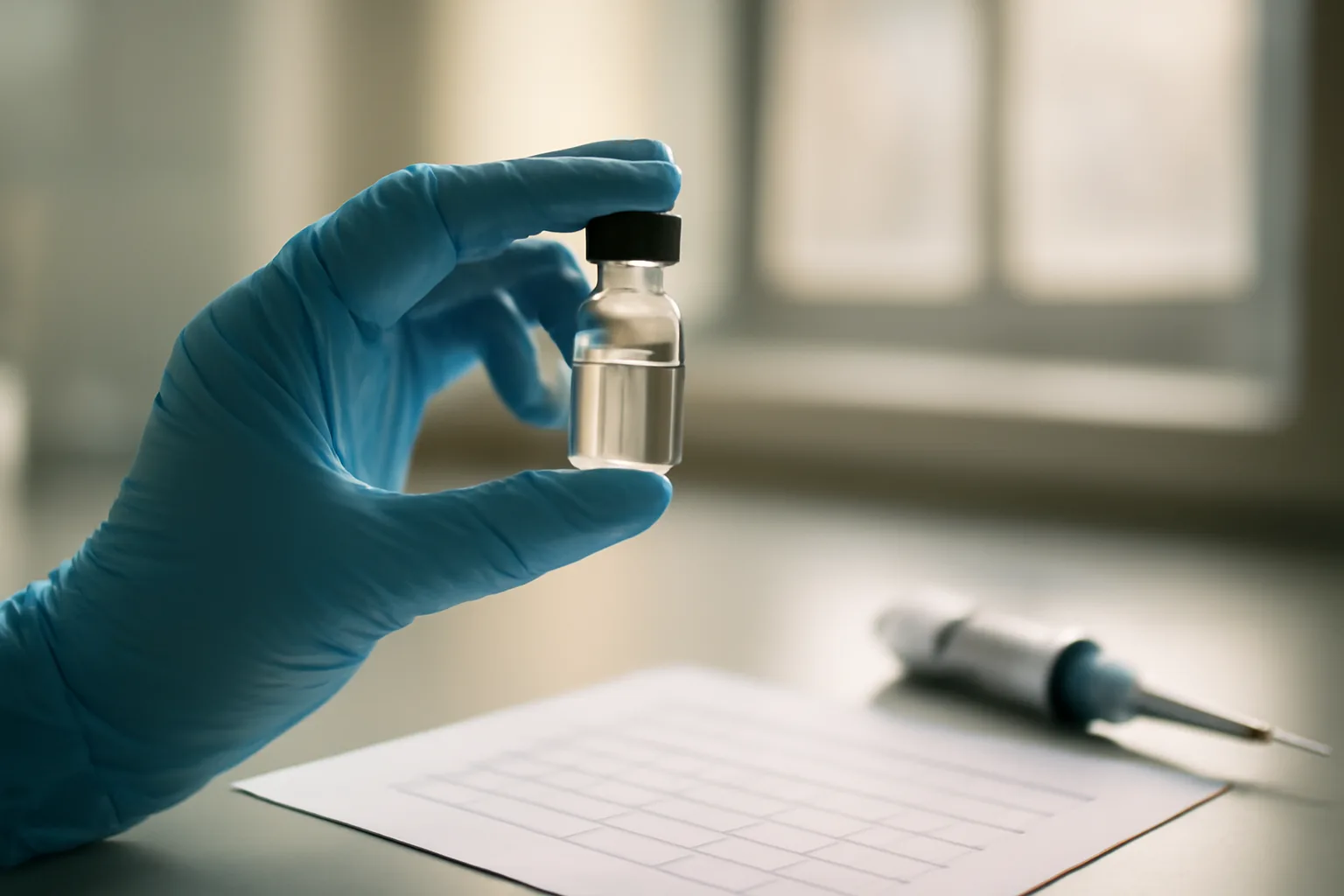
A legitimate COA for a peptide like Selank should show three things at minimum: purity by HPLC (high-performance liquid chromatography, usually expressed as a percentage, ideally above 98%), identity confirmation by mass spectrometry (confirming the molecule's actual mass matches Selank's sequence, Thr-Lys-Pro-Arg-Pro-Gly-Pro), and a batch or lot number that ties the document to the specific vial you're holding [3]. What it should NOT be: a generic PDF with no batch number, a screenshot, a document dated years before the batch you bought, or a COA for 'a' Selank product rather than the specific lot in your hand. If the batch number on your vial doesn't match the batch number on the COA, the document is worthless, it could be testing an entirely different production run. Ask the seller (or check the product page) for the testing lab's name. Independent third-party labs that commonly test peptides for the research market include places like Janoshik Analytical and Aurum Labs, among others. A seller who names their lab and posts lot-specific COAs is behaving very differently from one who says 'trust us, it's tested.' Here's a quick reference for what separates a usable COA from decoration:
| Element | Present in a real COA | Red flag if missing |
|---|---|---|
| Batch/lot number | Matches vial label exactly | Generic or absent |
| HPLC purity % | Stated numerically (e.g. 99.1%) | Vague ('high purity') |
| Mass spec identity | Molecular weight confirmed | Not mentioned |
| Testing lab named | Independent, named lab | 'In-house tested' only |
| Date of testing | Recent, tied to batch | Old or undated |
does Selank being approved in Russia mean it's quality-controlled the way FDA drugs are
No, and this distinction matters more than almost anything else in this article. Selank has marketing authorization in Russia as a prescription anxiolytic/nootropic peptide, developed originally at Russia's Institute of Molecular Genetics [2]. Russian regulatory approval is a real thing, it's not nothing, but it is not the same regulatory apparatus as the US FDA, and it does not extend to products sold in the US research chemical market. The FDA has not approved Selank for any indication in the United States. It has no New Drug Application on file and no listing in FDA's approved drug database, and it's generally sold in the US labeled 'not for human consumption' or 'for research use only,' language that exists specifically because the product hasn't gone through FDA review for safety or efficacy [4]. So when someone says 'it's approved in Russia, so it's fine,' they're doing something logically slippery: borrowing the credibility of one country's regulatory system to vouch for a product being sold under an entirely different (or absent) regulatory framework in another. A Russian-approved pharmaceutical product manufactured under Russian GMP standards is a different object than a vial of powder shipped from a peptide vendor's US warehouse, even if both are labeled 'Selank.' Don't let the first fact answer questions about the second.
what does the Russian clinical evidence on Selank actually look like, and does that tell you anything about product quality
This is worth separating clearly: clinical evidence quality and product quality are two different questions. You can have excellent trial data on a molecule and still get scammed by a bad vendor, or you can have thin trial data and a scrupulously well-made product. On the clinical side: Selank's evidence base is real but almost entirely Russian-language, conducted by researchers affiliated with the Institute of Molecular Genetics and related Russian institutions, and not independently replicated in Western, peer-reviewed, English-language randomized controlled trials at the scale Western regulators would want to see [5]. Some studies describe anxiolytic effects and effects on stress-related biomarkers in small patient cohorts. That's genuinely interesting pharmacology, and it's why Selank has a devoted following. But it is not the same evidentiary bar as, say, an SSRI with dozens of multi-country double-blind trials behind it. If you want the fuller picture on what the studies actually measured and where they fall short, selank covers that evidence base section by section. None of that tells you whether the specific vial you're about to buy is 99% pure Selank or 60% Selank cut with filler. Those are separate problems, and conflating them is how people end up either dismissing a genuinely interesting peptide outright, or trusting a sketchy vendor because 'the research looks good.'
how do I know I'm not accidentally buying Semax instead of Selank
Selank and Semax are sibling peptides from the same Russian research lineage, but they are not the same molecule and don't do the same thing. Semax is a heptapeptide derived from ACTH(4-10) fragment, associated more with cognitive/nootropic effects and originally studied for stroke and ADHD-adjacent indications in Russia. Selank is a synthetic analog of tuftsin, a different peptide family, studied mainly for anxiolytic effects [2][5]. The confusion happens constantly because they're sold by the same vendors, packaged similarly, and often stacked together. Check the vial label and COA for the actual peptide sequence, more than the product name on the front. Mass spec on the COA should confirm a molecular weight consistent with Selank (roughly 751 Da) rather than Semax (roughly 813 Da), if you want to sanity-check what you're holding against the paperwork. If you're trying to decide which one actually fits your goal (anxiety versus focus) rather than just verifying you got the right one, semax vs selank and selank vs semax both break down the practical differences.
what are the actual red flags that a Selank seller is cutting corners
A few patterns show up over and over in the peptide research market, and they're worth naming plainly rather than vaguely gesturing at 'buyer beware.' No COA at all, or a COA you have to request repeatedly and never receive. Legitimate sellers post it on the product page or send it within a day. A COA that doesn't match the batch number on your vial, or that's clearly a stock image / template document reused across multiple products. Price that's dramatically below the rest of the market with no explanation. Peptide synthesis and purification aren't free, and third-party testing isn't free either. If everyone else's 5-10mg vial is in a certain price band and one seller is 40-50% under that, ask why. Vague sourcing language: 'pharmaceutical grade' with nothing to back it up, or claims of 'USP grade' for a compound that has no USP monograph to begin with (Selank doesn't, so that specific claim is a fabrication on its face) [1]. No clear country of manufacture, no company name on the invoice, or a seller who won't answer a direct email about their testing lab. If you can't get a straight answer to 'who tested this batch and can I see it,' that's your answer.
should I test Selank myself before using it
For most individual buyers, no, not in the sense of running your own HPLC. That equipment costs tens of thousands of dollars and isn't something you'll have in a home lab. What you CAN reasonably do: Cross-reference the COA's batch number against what's printed on your vial label, every single time, more than the first order. Check that the testing lab named on the COA is a real, findable, independent lab, not a shell name with no online presence. Look at solubility and appearance: Selank should reconstitute clearly in bacteriostatic water without visible particulate. Cloudiness or clumping after proper reconstitution is a warning sign, though clear solution alone doesn't prove purity either, it just rules out gross contamination. If you're using injectable routes and want the reconstitution and handling details covered properly rather than guessed at, see selank semax injection for that process. Getting the mechanics wrong (wrong diluent, unrefrigerated storage, reused needles) can degrade a genuinely high-quality peptide just as fast as buying a bad one in the first place.
does third-party testing guarantee the product is safe to use
No, and this is a distinction worth being blunt about. A COA showing 99% purity tells you the molecule in the vial is mostly Selank. It does not tell you the product is sterile, it does not tell you it's free of endotoxins if you're planning to inject it, and it does not substitute for a decision about whether using an unapproved research compound is something you want to do at all. Sterility and endotoxin testing (usually via LAL, Limulus Amebocyte Lysate assay) are separate line items from purity testing, and not every vendor runs both. If you intend to use the product via injection rather than sublingually or intranasally, sterility testing matters a lot more, because you're bypassing the body's usual barriers to contamination. Side effect risk also isn't eliminated by a clean COA. Even a perfectly pure batch of Selank can produce effects worth knowing about beforehand, covered in more detail at selank side effects. Quality verification answers 'is this the molecule it claims to be, at the stated purity,' not 'is this a good idea for me specifically.'
how much should Selank cost, and does price tell you anything about quality
Prices in the US research peptide market for a 5-10mg vial of Selank commonly run somewhere in the $30-70 range as of the mid-2020s, though this shifts with vendor, batch size, and whether it's sold as lyophilized powder or pre-mixed. There's no official price list because there's no FDA-approved product to benchmark against, so treat any specific number you see quoted elsewhere, including here, as a snapshot rather than a fixed rate. Price correlates loosely with quality but isn't a reliable proxy on its own. A high price doesn't guarantee a good COA, and some reputable-seeming vendors have had batches fail independent re-testing despite premium pricing. What price DOES tell you: extremely low prices are close to disqualifying, because they usually mean at least one of synthesis quality, purification, or testing got skipped to hit that number. The better move is comparing COAs across 2-3 sellers at similar price points, not comparing price alone. If two vendors are both around $50 and one has a lot-matched COA from a named lab and the other has nothing, that's the actual signal, not the ten-dollar difference between them.
what should I actually do with all this before I buy
Practically: ask for the COA before you pay, not after. Confirm the batch number will match what's printed on the vial. Confirm the testing lab is named and independently findable. Be suspicious of pricing that's dramatically below the rest of the market. Understand clearly that Russian marketing approval is not FDA approval and doesn't extend to the vial you're about to receive [2][4]. And keep clinical evidence quality and product quality as two separate mental buckets, because a genuinely interesting peptide with real (if Russian-language, non-replicated) research behind it can still be ruined by a careless or dishonest vendor. If you want a provider-reviewed route rather than piecing this together vendor by vendor, Selank Co reviews sourcing against these same criteria and points to a fulfilling pharmacy partner rather than selling or compounding anything itself. That doesn't remove the underlying uncertainty in the Russian evidence base, nothing does, but it does put a second set of eyes on the paperwork before it reaches you.
Frequently asked questions
Is there an FDA-approved test for Selank purity?
No. Selank has no FDA approval, no USP monograph, and no official reference standard in the US. The only quality check available is a third-party certificate of analysis (COA) from an independent lab, matched to the specific batch number on your vial. There's no government seal to verify against.
What percentage purity should Selank be?
Look for HPLC purity of 98% or higher on the COA. Below that, you're paying for a meaningful fraction of impurities or degradation products. A legitimate lab report states this as a specific number, not a vague claim like 'high purity' with nothing to back it.
Does Russian approval of Selank mean it's FDA approved?
No. Selank is registered as a prescription anxiolytic in Russia, developed at Russia's Institute of Molecular Genetics, but that approval runs through Russian regulatory bodies, not the FDA. The FDA has not approved Selank for any use in the US, and it's typically sold labeled for research use only.
Is Selank the same thing as Semax?
No. They're related Russian-developed peptides but structurally different: Semax derives from an ACTH fragment and leans toward cognitive effects, while Selank is a tuftsin analog studied mainly for anxiolytic effects. Check the COA's molecular weight (Selank is roughly 751 Da, Semax roughly 813 Da) if you want to confirm which one you actually have.
How do I read a Selank certificate of analysis?
Check for a batch number matching your vial, an HPLC purity percentage (98%+ is the bar), mass spectrometry confirming the molecule's identity and weight, the name of the testing lab, and a testing date reasonably close to your purchase. Missing any of these turns the document into decoration rather than proof.
Why is Selank's clinical evidence mostly in Russian?
Selank was developed and studied primarily by Russian researchers at institutions like the Institute of Molecular Genetics, and most trials were published in Russian-language journals. Western, English-language, independently replicated randomized trials at the scale regulators expect largely don't exist yet, which is the single most important caveat for anyone reading the research.
What's a red flag that a Selank seller is unreliable?
No COA available on request, a COA whose batch number doesn't match your vial, pricing dramatically below the rest of the market, vague claims like 'pharmaceutical grade' or 'USP grade' (Selank has no USP monograph, so that claim is false on its face), or a seller who won't name their testing lab.
Can I test Selank purity myself at home?
Not meaningfully. HPLC and mass spec equipment cost tens of thousands of dollars and aren't accessible to individual buyers. What you can do is verify the COA's batch number matches your vial, confirm the named testing lab is real and independent, and check for clean reconstitution without particulate.
Does a clean COA mean Selank is safe to inject?
Not fully. Purity testing (HPLC) confirms the molecule and its concentration, but sterility and endotoxin testing (typically LAL assay) are separate checks not every vendor runs. If you're using an injectable route, ask specifically whether sterility testing was done, more than purity.
How much does Selank cost per vial?
US research peptide vendors commonly price a 5-10mg vial somewhere in the $30-70 range as of the mid-2020s, though this varies by vendor and batch size. There's no official price because there's no FDA-approved product to benchmark against, so treat any quoted figure as a rough snapshot.
What independent labs test peptides like Selank?
Vendors in the research peptide space commonly use independent analytical labs such as Janoshik Analytical or Aurum Labs for third-party purity and identity testing. A trustworthy seller names their lab openly and provides lot-specific reports rather than a single generic document reused across every batch.
Should I trust a vendor who says Selank is 'pharmaceutical grade'?
Be skeptical of that phrase alone. It has no enforced legal definition for a product with no FDA approval or USP monograph. Ask instead for the actual COA: batch-matched purity percentage, mass spec identity confirmation, and the name of the testing lab. The document matters, the marketing phrase doesn't.
Sources
- U.S. Pharmacopeia, USP-NF Compendial Notices: Selank has no USP monograph or official US reference standard
- PubMed, Kolyasnikova et al., 'Neurogenetically Determined Anxiolytic Effect of the Peptide Selank', PMID 21762062: Selank was developed by Russian researchers including those affiliated with the Institute of Molecular Genetics and studied as an anxiolytic peptide
- FDA Guidance for Industry, 'Analytical Procedures and Methods Validation for Drugs and Biologics' (2015): Standard elements of a legitimate analytical certificate include HPLC purity and identity confirmation methods like mass spectrometry
- 21 CFR 312.2, Investigational new drug application scope and applicability: A compound without an approved marketing application or active IND is not a legally marketed drug in the US and cannot be sold for human use
- PubMed, Kasparov et al., 'Semax, an Analogue of ACTH(4-10) with Nootropic Properties', PMID 26417308: Semax is a related but structurally distinct Russian-developed peptide studied for different, more cognitively-oriented indications than Selank
- PubMed, Medvedev et al., 'Peptide Selank in the Treatment of Anxiety Disorders and Neurasthenia', PMID 26591944: Clinical studies on Selank's anxiolytic effects were conducted in small patient cohorts and published in Russian-affiliated research, without large-scale Western replication